The Role of Portions in Energy Balance
Understanding portion sizes and their relationship to energy intake through general nutritional science concepts.
Introduction
Portion size—the amount of food consumed at a single eating occasion—is one factor that relates to overall energy intake. Understanding how portions connect to energy balance is useful context for thinking about everyday eating patterns, though portion needs vary greatly among individuals.
What is Energy Balance?
Energy balance is the relationship between calories consumed (energy in) and calories expended (energy out). This is a fundamental physiological concept:
- Positive energy balance: More calories consumed than expended
- Negative energy balance: Fewer calories consumed than expended
- Neutral energy balance: Calories consumed equal calories expended
Energy balance influences body weight over time. However, many factors affect how the body processes energy, as we'll explore below.
Portion Size and Calorie Intake
Larger portions generally contain more calories than smaller portions of the same food. This is straightforward: a larger serving of pasta has more calories than a smaller serving.
Portion Size Trends: Research shows that portion sizes of commercially available foods have increased over recent decades in many Western countries, including the UK. This is an observable fact that contextualizes discussions about eating patterns.
Individual Variation: However, the relationship between portion size and actual energy intake varies among individuals. Factors affecting this relationship include:
- Appetite regulation and satiety signals
- Awareness of portion sizes
- Food composition and nutrient density
- Eating speed and mealtime environment
- Individual metabolic differences
General Plate Composition Concepts
Nutritional science suggests several general approaches to meal composition that may support nutritional adequacy and satiety. These are frameworks, not prescriptions:
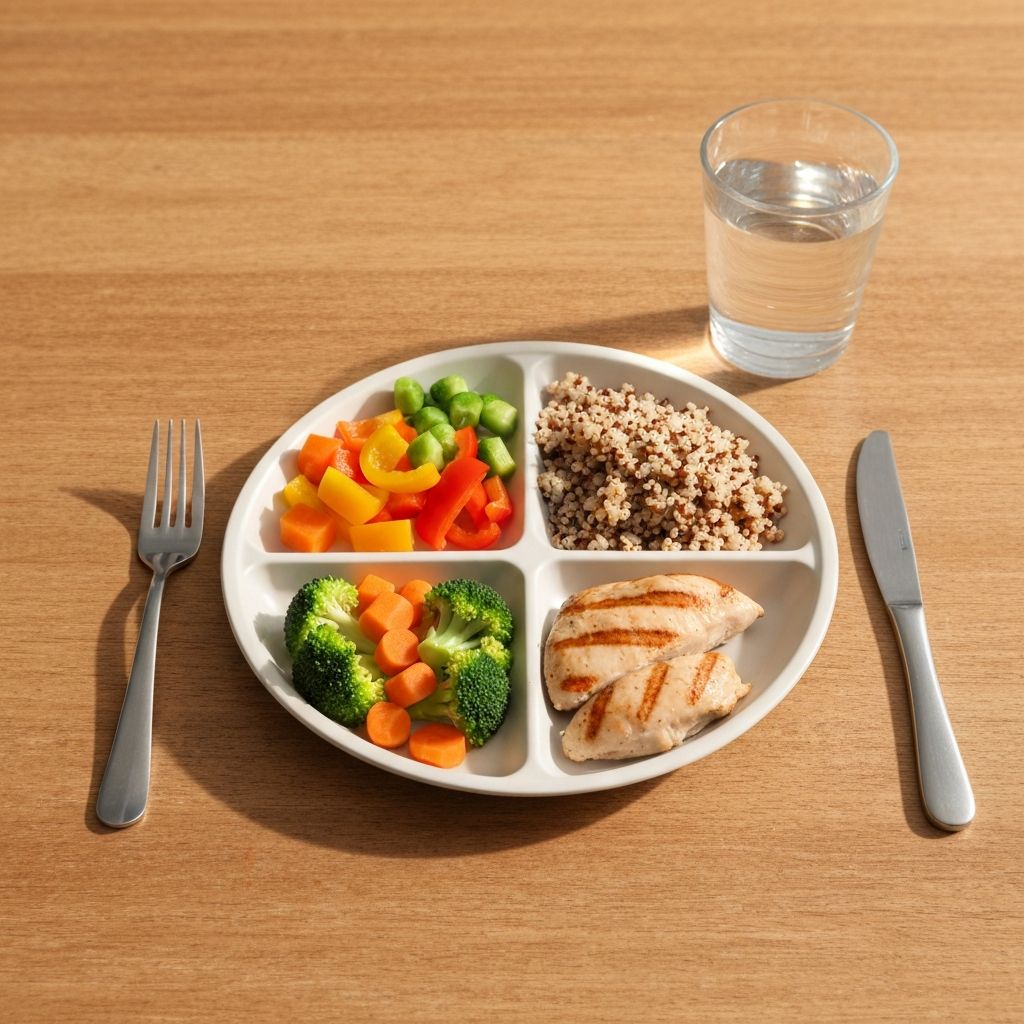
The "Half-Plate" Concept: Filling approximately half a plate with vegetables provides volume, nutrients, and fiber with relatively low calorie density. This approach supports nutrient intake without necessarily requiring calorie counting.
Protein Portion: Including a source of protein (approximately 1/4 of the plate) supports muscle maintenance and satiety. The specific amount varies based on individual needs.
Whole Grain Carbohydrates: Another quarter of the plate might include whole grain carbohydrates, which provide sustained energy, fiber, and micronutrients.
Healthy Fats: Including a source of healthy fat (nuts, seeds, oils, avocado) supports hormone production, vitamin absorption, and satiety.
Individual Adaptation: These proportions are flexible and should be adapted to individual preferences, cultural food traditions, activity level, and specific needs.
Factors Affecting Energy Expenditure
While portions influence energy intake, energy expenditure is equally important to energy balance and is affected by multiple factors beyond voluntary exercise:
Basal Metabolic Rate (BMR): The calories burned at rest to support basic physiological functions. This varies based on age, body composition, genetics, and hormones.
Physical Activity: Includes both structured exercise and daily movement (occupational activity, fidgeting, standing). Activity level varies greatly among individuals.
Thermic Effect of Food: The energy required to digest, absorb, and process nutrients. This varies based on macronutrient composition—protein requires more energy to process than carbohydrates or fat.
Age: Metabolic rate generally decreases with age, though physical activity and muscle mass influence this relationship.
Body Composition: Muscle tissue is more metabolically active than fat tissue, so individuals with higher muscle mass may have higher metabolic rates.
Satiety and Portion Size
Satiety signals—the feelings of fullness that lead to stopping eating—influence actual food consumption independently of portion size. Factors affecting satiety include:
- Protein content: Protein is the most satiating macronutrient
- Fiber content: Fiber adds volume without excessive calories
- Food texture: Solid foods may be more satiating than liquids
- Eating speed: Faster eating may override satiety signals
- Mindfulness: Attention to eating may enhance satiety awareness
Practical Considerations
While portion size is one factor in energy balance, other considerations matter:
- Food quality and nutrient density
- Individual satiety and appetite regulation
- Physical activity and movement patterns
- Sleep quality and stress levels
- Meal frequency and timing preferences
- Cultural and personal food preferences
Key Takeaways
Portion size relates to energy intake in straightforward ways, and larger portions generally provide more calories. However, energy balance is complex, involving both intake and expenditure, and influenced by numerous individual factors. Understanding portion concepts is useful context for thinking about eating patterns without suggesting a single "correct" approach applies to everyone.