Hydration Science in Everyday Life
Learn about water and fluid intake, their physiological roles, and how hydration needs vary among individuals.
Introduction
Water and fluid intake play fundamental roles in human physiology. Understanding hydration science helps contextualize why adequate fluid intake matters for health and how individual needs vary.
Functions of Water in the Body
Water comprises approximately 60% of adult body weight and serves multiple critical functions:
Temperature Regulation: Sweating and respiration allow the body to cool itself through water evaporation. This thermoregulation is essential, particularly during heat exposure or physical activity.
Nutrient Transport: Water carries vitamins, minerals, and other nutrients through the bloodstream to cells. It enables the dissolution of water-soluble vitamins (B vitamins, vitamin C) for absorption.
Waste Removal: Kidneys filter metabolic waste products into urine, which requires adequate water. Dehydration can compromise kidney function.
Joint Lubrication: Synovial fluid in joints is water-based, allowing smooth movement. Dehydration can affect joint comfort.
Digestion: Water is essential for breaking down food and absorbing nutrients in the digestive tract.
Cognitive Function: Brain tissue is approximately 75% water. Even mild dehydration can affect concentration, mood, and cognitive performance.
Hydration and Body Fluid Balance
The body maintains precise fluid balance through complex regulatory mechanisms:
Thirst Mechanism: The hypothalamus detects changes in blood osmolarity (concentration of dissolved particles) and triggers thirst. This system generally works well in healthy individuals, though it can be delayed with age or in certain conditions.
Hormone Regulation: Antidiuretic hormone (ADH) regulates water reabsorption in the kidneys. When hydration status is low, ADH increases, reducing urine output. When hydration is adequate, ADH decreases.
Electrolyte Balance: Sodium, potassium, and other electrolytes regulate fluid distribution inside and outside cells. This balance is essential for nerve and muscle function.
Hydration Needs
There is no single hydration requirement that applies to everyone. Individual needs vary based on multiple factors:
Factors Affecting Hydration Needs:
- Climate: Hot environments increase fluid loss through sweating
- Physical Activity: Exercise increases fluid loss and need for hydration
- Age: Older adults have reduced thirst sensation and may need conscious attention to hydration
- Health Status: Fever, diarrhea, vomiting, and certain medical conditions increase fluid needs
- Medications: Some medications affect fluid retention or loss
- Pregnancy and Breastfeeding: These states increase fluid requirements
- Body Size: Larger individuals typically need more absolute water than smaller individuals
General Hydration Guidance
The "8x8 Rule": A common guideline suggests drinking eight 8-ounce glasses (about 2 liters) of water daily. This is a rough starting point, not a strict requirement.
Urination Color: Pale yellow urine generally indicates adequate hydration; dark yellow suggests increased hydration is needed. However, this varies with diet and medications.
Thirst: Thirst is a reasonable guide for most people, though it may lag behind actual hydration needs during intense activity or in older adults.
Flexible Intake: Hydration needs change throughout the day based on activity, temperature, and other factors. Consistent sipping throughout the day rather than occasional large intakes often supports steady hydration.
Sources of Fluids
Total fluid intake comes from multiple sources:
Beverages: Water, tea, coffee, milk, juice, and other drinks provide obvious fluid intake. Caffeinated beverages contribute to overall hydration despite mild diuretic effects.
Food: Many foods contain significant water content:
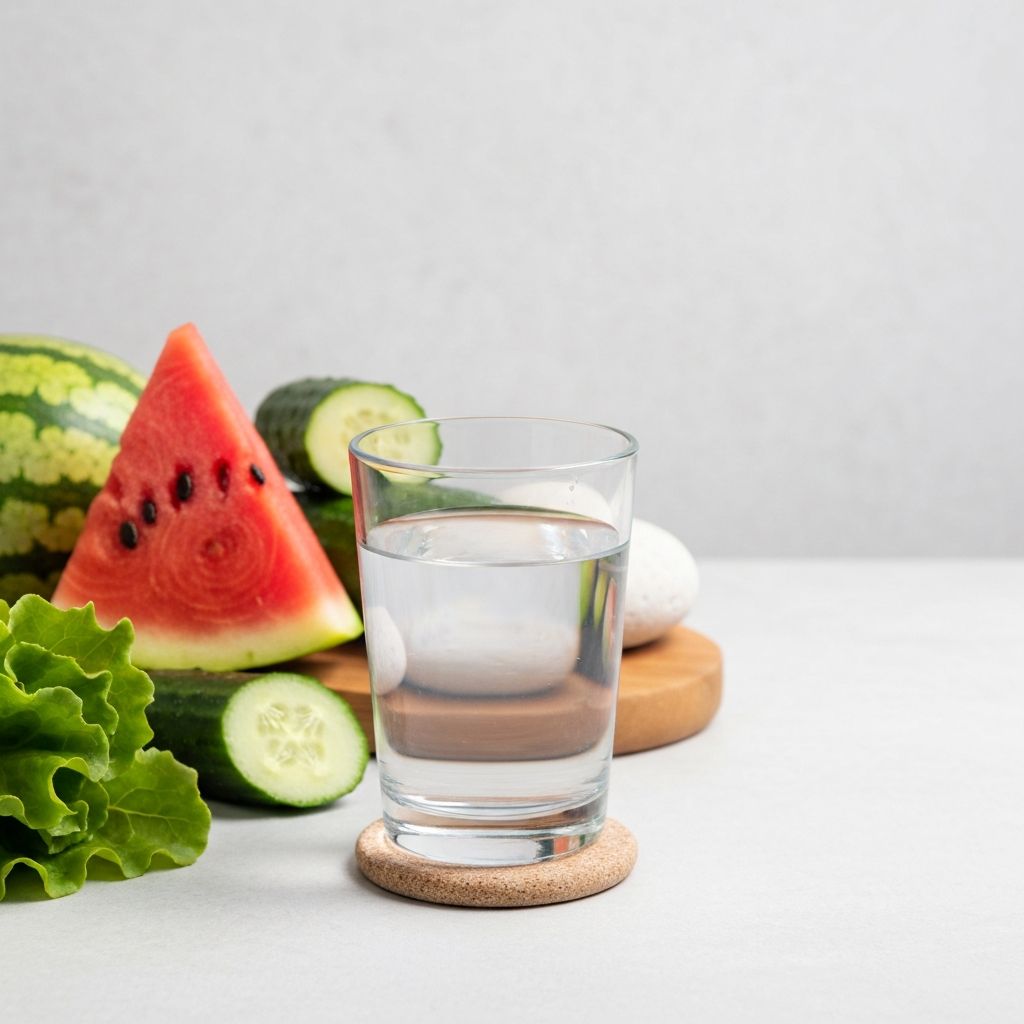
- Vegetables: lettuce, cucumber, tomato (90%+ water)
- Fruits: watermelon, oranges, strawberries (85-90% water)
- Soups and broths (90%+ water)
- Grains and legumes when cooked (60-70% water)
In practice, food contributes approximately 20% of daily water intake in many populations.
Metabolic Water: The body produces a small amount of water through metabolic processes.
Dehydration and Overhydration
Dehydration: Occurs when fluid loss exceeds fluid intake. Mild dehydration (1-2% body weight loss) can cause thirst and reduced physical performance. Severe dehydration is a medical emergency.
Signs of Dehydration: Thirst, dry mouth, dizziness, fatigue, dark urine, reduced urination.
Overhydration (Hyponatremia): Rare in typical circumstances but can occur in endurance athletes consuming large volumes of water without electrolyte replacement. Results in dangerously diluted blood sodium.
Special Considerations
During Physical Activity: Athletes typically need more fluid than sedentary individuals. Individual sweat rates vary, and hydration strategy should be personalized.
In Heat: Hot environments increase fluid needs. Gradual acclimatization to heat reduces sweat loss while maintaining cooling efficiency.
With Illness: Fever, diarrhea, and vomiting increase fluid loss and hydration needs.
Key Takeaways
Water and fluid intake are essential for virtually every physiological function. While general guidance exists, individual hydration needs vary based on climate, activity, age, health status, and other factors. Most people can use thirst and urine color as reasonable guides, while athletes and older adults may need more conscious attention to hydration.